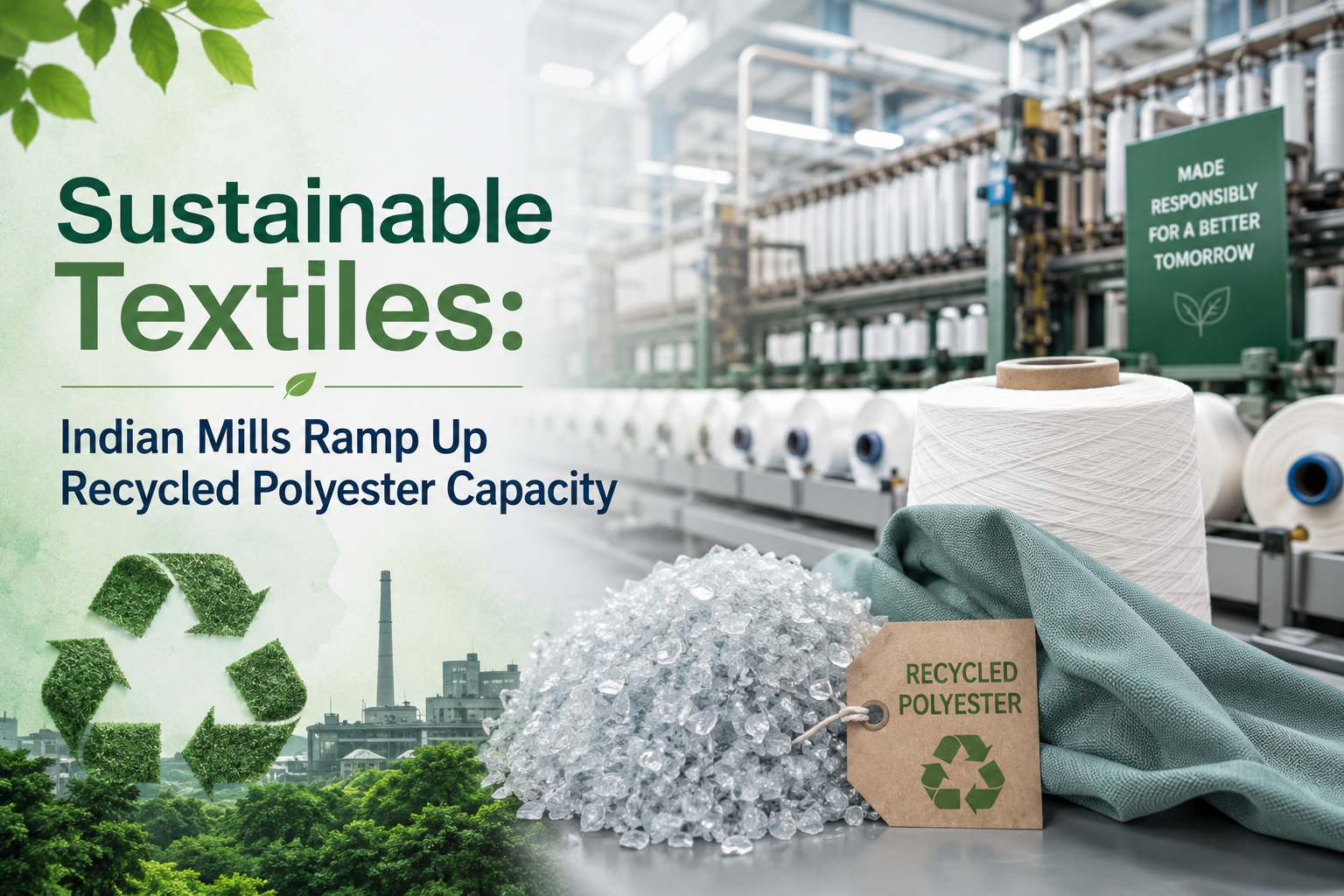
India's textile industry is witnessing a rapid capacity ramp-up in recycled polyester (rPET) yarn and fabric production, driven by firm commitments from global apparel and home textile brands to achieve specific recycled content targets in their product ranges.
Leading spinning and weaving mills in Surat, Ludhiana and Coimbatore are investing in PET bottle recycling infrastructure and rPET spinning lines to meet growing international demand.
Globally, brands including H&M, Zara, Nike and Gap have pledged to achieve 50–100% recycled or sustainably sourced material in their collections by 2030. This is creating firm demand signals for Indian manufacturers who supply these brands.
India generates approximately 3.5 million tonnes of PET plastic waste annually, of which only 30% is currently recycled into textile-grade fibre. Industry leaders estimate this figure needs to rise to 70% to meet projected demand, requiring significant investment in collection, sorting and processing infrastructure.
The government's Extended Producer Responsibility (EPR) framework for plastic packaging, notified under the Plastic Waste Management Rules, is expected to improve the organised collection of PET bottles and lower raw material costs for rPET producers.
"We have doubled our rPET spinning capacity to 180 tonnes per day in the last 18 months. The offtake from international brands is very strong and margins are better than virgin polyester," said the MD of a leading Surat-based synthetic yarn manufacturer.
Certification is becoming a key differentiator, with Global Recycled Standard (GRS) certification now a prerequisite for most international brand tenders. Indian mills are increasingly obtaining GRS certification, with the number of certified units having tripled in the last two years.