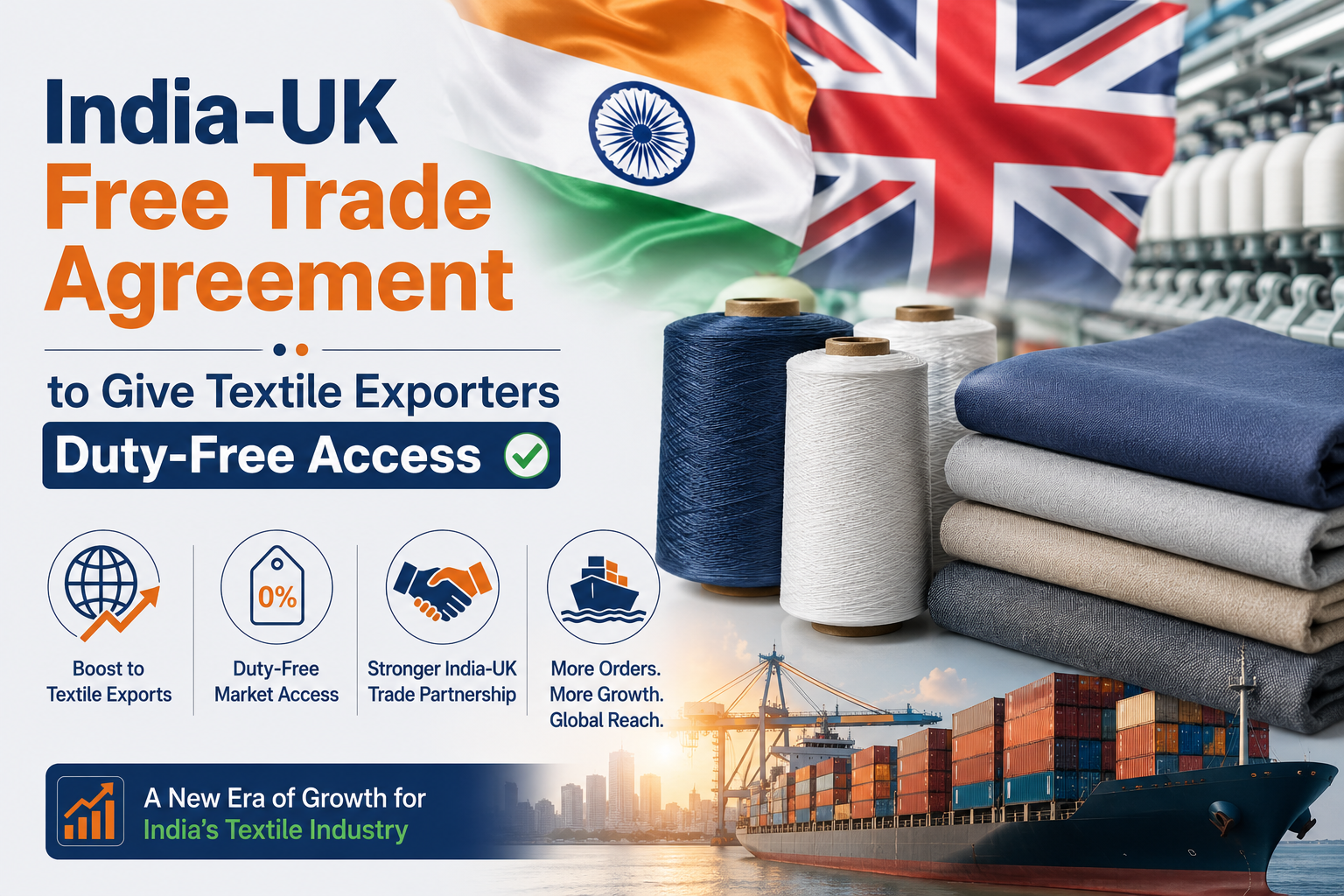
The much-anticipated India-United Kingdom Free Trade Agreement (FTA) is expected to include provisions for duty-free access to the UK market for Indian textiles and apparel, according to officials familiar with the negotiations.
Currently, Indian textile and garment exports to the UK attract import duties ranging from 8% to 12%, putting Indian exporters at a disadvantage compared to countries like Bangladesh and Pakistan, which enjoy preferential duty access under the UK's Developing Countries Trading Scheme (DCTS).
The elimination of these duties under the India-UK FTA would significantly enhance the price competitiveness of Indian textiles in one of Europe's most important fashion and home textile markets.
India currently exports approximately $1.4 billion worth of textiles and garments to the UK annually. Industry projections suggest this figure could rise to $3–4 billion within five years of the FTA coming into force.
The Apparel Export Promotion Council (AEPC) has described the development as potentially "transformative" for the Indian garment industry, particularly for formal wear, sustainable fashion and premium home textile segments where UK buyers have strong demand.
Key Indian beneficiary sectors would include ready-made garments from Tirupur, Delhi-NCR and Bengaluru, home textiles from Karur and Panipat, and technical textiles from multiple clusters.
Trade analysts caution that Indian exporters will need to build compliance capability around UK-specific sustainability and traceability requirements, including due diligence on supply chain labour standards, which have become increasingly important for UK retailers.